

1. What Are Industrial Communication Protocols?
Industrial communication protocols are standardized methods that allow industrial devices to exchange data within automation systems. They enable PLCs, sensors, HMIs, drives, robots, and SCADA systems to communicate accurately, reliably, and in real time.
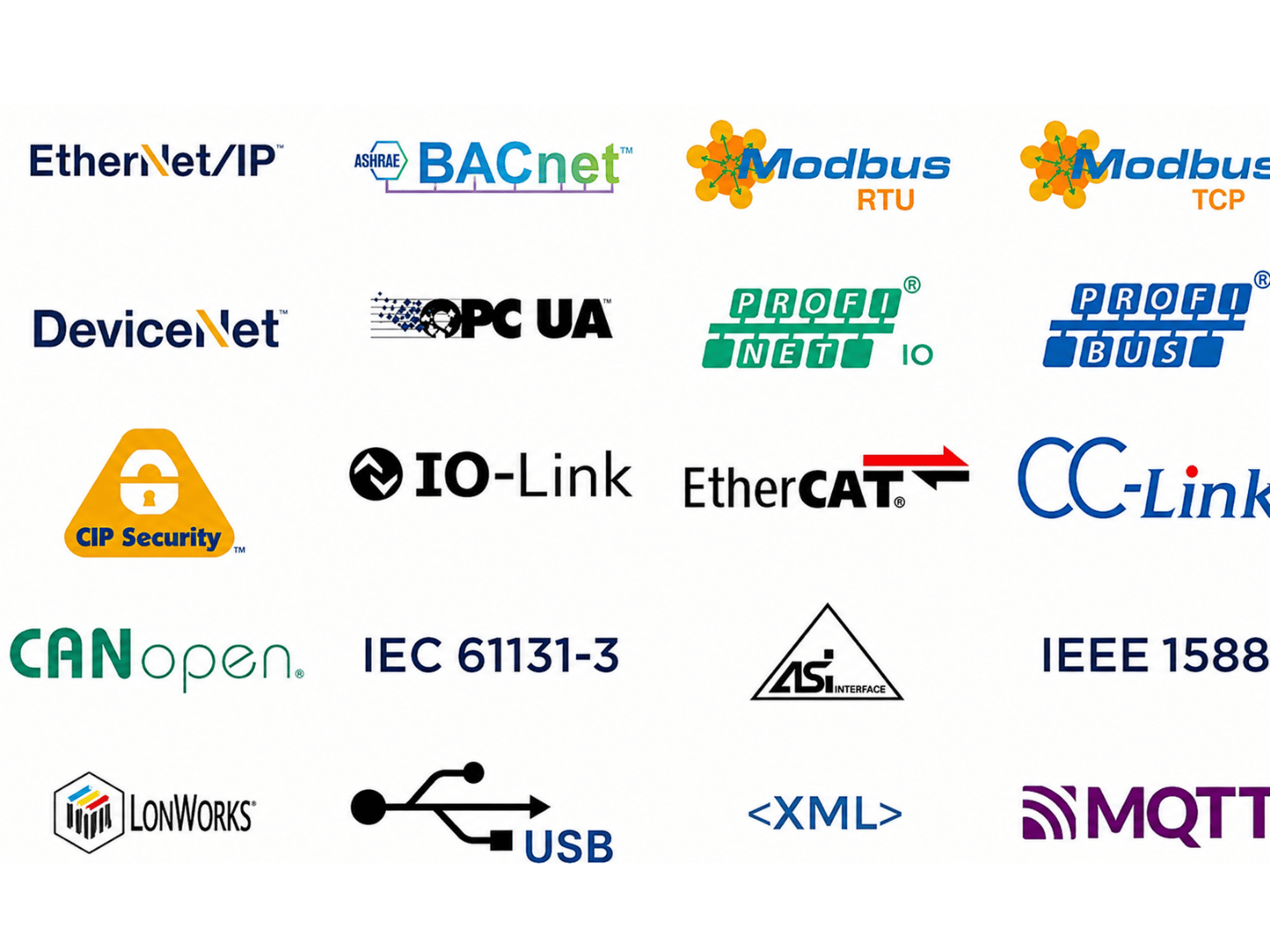
These protocols form the backbone of industrial automation, ensuring seamless data exchange even in harsh environments with electrical noise, vibration, and extreme temperatures.
Learn more about industrial communication networks in our complete guide.
2. Advantages and Disadvantages of Popular Industrial Communication Protocols
2.1. Modbus – Simple, Reliable, and Cost-Effective
Modbus is one of the most widely used industrial communication protocols because of its simplicity and open architecture.
Advantages
-
Easy to implement and configure
-
Open protocol with broad vendor support
-
Low hardware and integration costs
-
Ideal for basic data acquisition and monitoring
Limitations
-
Relatively slow communication speed
-
Limited diagnostic capabilities
-
No built-in cybersecurity features
Best suited for: Basic automation systems, energy monitoring, and legacy equipment.
2.2. PROFIBUS – A Proven Fieldbus Standard
PROFIBUS has been a trusted communication standard in factory and process automation for decades, especially in Siemens-based systems.
Advantages
-
Highly reliable in industrial environments
-
Excellent noise immunity
-
Stable performance for large production lines
Limitations
-
Lower bandwidth than Industrial Ethernet
-
Higher installation costs for cables and specialized hardware
-
Less flexible for future digital transformation
Best suited for: Existing Siemens installations, remote I/O, and process automation.
2.3. PROFINET – High-Speed Industrial Ethernet
PROFINET is one of today's most popular Industrial Ethernet protocols, delivering high-speed communication and deterministic real-time performance.
Advantages
-
High data transmission speed
-
Supports real-time and motion control applications
-
Advanced diagnostics and network management
-
Easy integration with modern automation systems
Limitations
-
Higher initial investment
-
Requires networking knowledge for configuration and maintenance
Best suited for: Modern manufacturing lines, robotics, machine automation, and smart factories.
2.4. EtherNet/IP – Flexible Industrial Ethernet
EtherNet/IP combines standard Ethernet technology with the Common Industrial Protocol (CIP), making it one of the leading Industrial Ethernet solutions worldwide.
Advantages
-
Uses standard Ethernet infrastructure
-
Easy integration with enterprise IT systems
-
Strong ecosystem, especially with Rockwell Automation products
Limitations
-
Motion synchronization may not be as precise as PROFINET or EtherCAT
-
Network performance depends heavily on proper design and configuration
Best suited for: Manufacturing systems using Rockwell Automation, PLCs, PACs, and enterprise integration.
2.5. OPC UA – The Foundation for IIoT and Digital Transformation
OPC UA is a platform-independent communication standard designed for secure and reliable data exchange between OT and IT systems.
Advantages
-
Built-in encryption and authentication
-
Platform-independent architecture
-
Rich, structured data models
-
Excellent interoperability between different vendors
Limitations
-
Higher processing overhead
-
Not intended for low-level real-time machine control
Best suited for: SCADA, MES, Edge Computing, Cloud integration, and Industrial IoT applications.
2.6. Which Industrial Communication Protocol Should You Choose?
The right protocol depends on your existing equipment, application requirements, budget, and long-term digital transformation goals.
-
Choose Modbus if you need a simple and affordable communication solution.
-
Choose PROFIBUS when maintaining or expanding legacy Siemens systems.
-
Choose PROFINET for high-speed, real-time factory automation.
-
Choose EtherNet/IP if your facility relies on Rockwell Automation or requires close integration with enterprise IT systems.
-
Choose OPC UA when secure data exchange, interoperability, and cloud connectivity are your priorities.
In many modern factories, multiple protocols coexist. Instead of replacing existing equipment, companies often integrate them using industrial gateways and protocol converters.
3. Which Industrial Communication Protocol Should You Choose?
The right protocol depends on your existing equipment, application requirements, budget, and long-term digital transformation goals.
- Choose Modbus if you need a simple and affordable communication solution.
- Choose PROFIBUS when maintaining or expanding legacy Siemens systems.
- Choose PROFINET for high-speed, real-time factory automation.
- Choose EtherNet/IP if your facility relies on Rockwell Automation or requires close integration with enterprise IT systems.
- Choose OPC UA when secure data exchange, interoperability, and cloud connectivity are your priorities.
In many modern factories, multiple protocols coexist. Instead of replacing existing equipment, companies often integrate them using industrial gateways and protocol converters.
4. Connect Every Industrial Network with Aucontech
Modern manufacturing facilities rarely rely on a single communication protocol. Machines from different vendors often use different industrial networks, creating isolated data silos that limit visibility and efficiency.
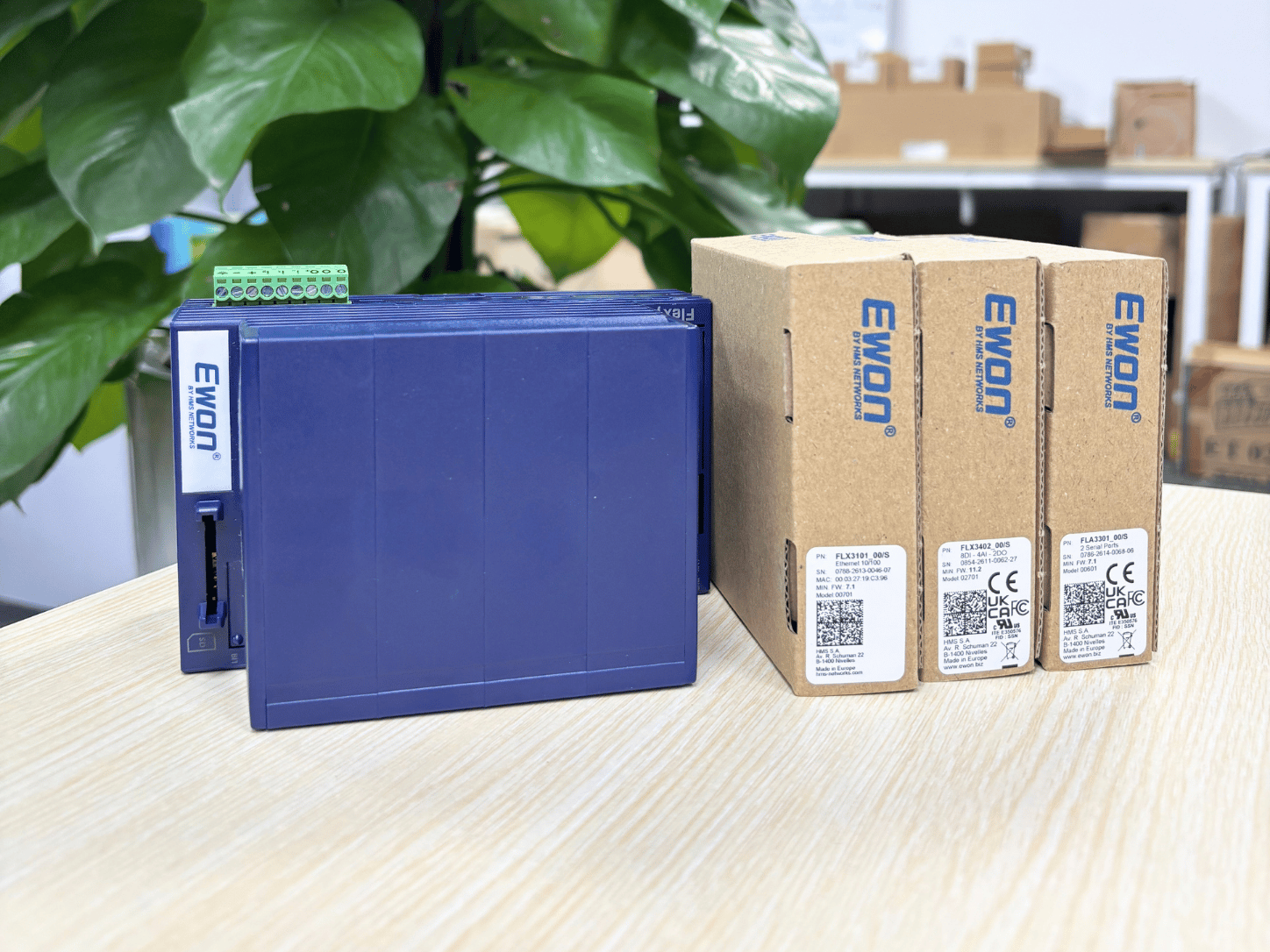
Aucontech helps bridge these communication gaps with industrial IoT connectivity solutions such as the Ewon Flexy Industrial IoT Gateway.
With support for multiple industrial protocols including Modbus, PROFINET, OPC UA, EtherNet/IP, MQTT, and many others - Ewon Flexy enables seamless communication between legacy equipment, modern automation systems, SCADA platforms, and cloud applications.
Whether you're connecting machines across the factory floor or building a complete IIoT infrastructure, Aucontech provides the connectivity foundation for a successful digital transformation.


