

1. What Is an IoT Gateway?
An IoT Gateway is an intelligent edge device that connects industrial equipment and field devices to enterprise systems, cloud platforms, and Industrial IoT (IIoT) applications.
Read more at here: Ewon Flexy 205
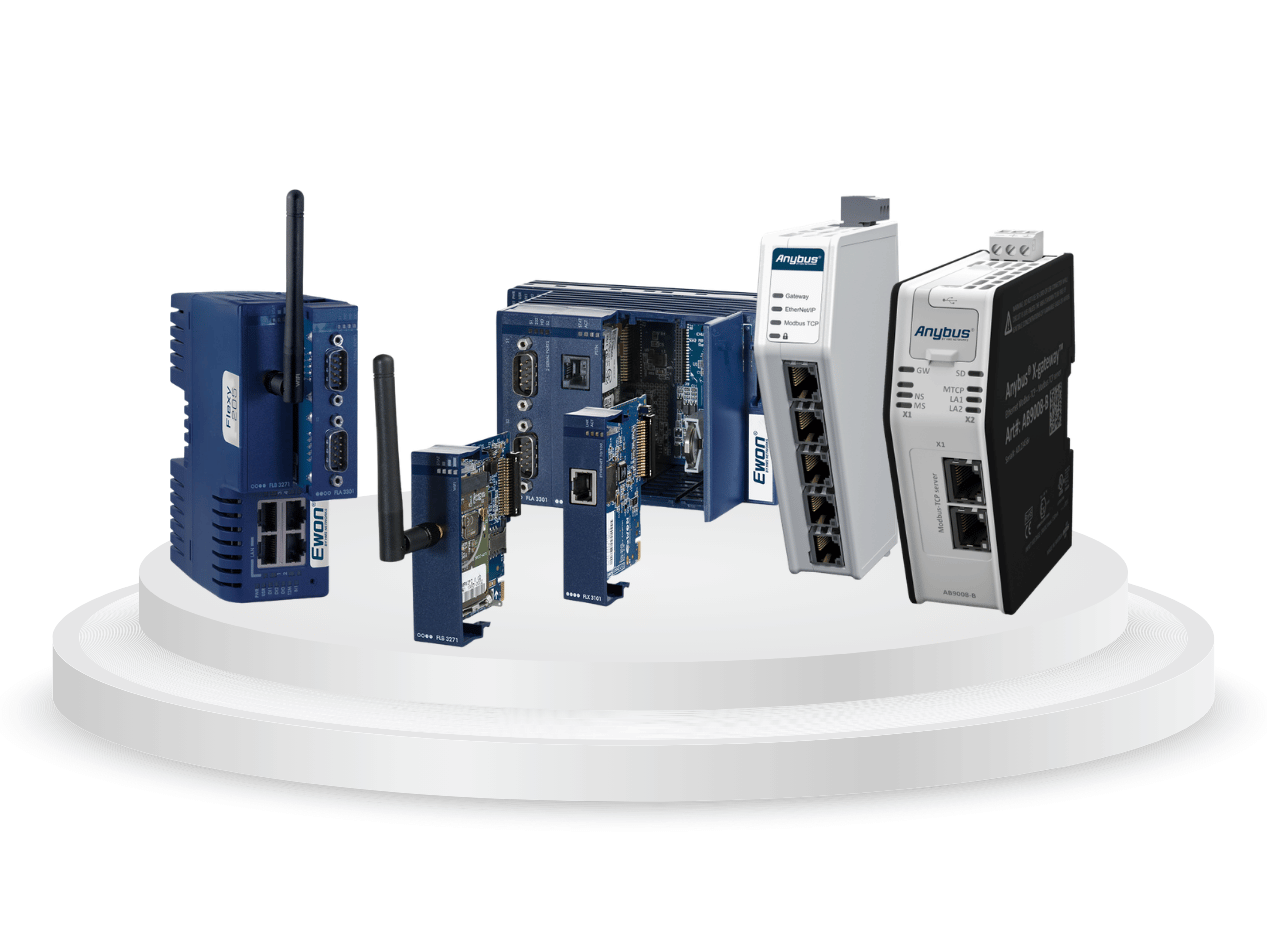
Rather than simply forwarding data, an IoT Gateway acts as a bridge between operational technology (OT) and information technology (IT). It collects data from industrial devices, translates communication protocols, performs edge processing, enhances security, and securely transmits information to cloud services or on-premise applications.
Industrial IoT Gateways are a key component of digital transformation, enabling manufacturers to connect legacy equipment with modern IIoT platforms without replacing existing assets.
Learn more about Industrial IoT Gateways in our complete guide.
2. What Is an IoT Gateway Used For?
An IoT Gateway enables secure, two-way communication between industrial equipment and higher-level systems such as SCADA, MES, ERP, and cloud platforms.
Its primary functions include:
-
Collecting data from industrial devices
-
Translating different communication protocols
-
Routing data between OT and IT systems
-
Performing edge computing and local data processing
-
Reducing bandwidth usage through data filtering
-
Improving response time by processing data closer to the source
-
Securing industrial communication with encryption and access control
Instead of sending every piece of raw data directly to the cloud, an IoT Gateway processes and filters information locally, reducing network traffic and improving overall system performance.
3. How Does an IoT Gateway Work?
An IoT Gateway serves as the communication hub between industrial devices and cloud or enterprise applications.
It supports a wide range of communication interfaces, including:
3.1. Wired Connections
-
RS-232
-
RS-485
-
Ethernet (LAN)
-
USB
3.2. Wireless Connections
-
Wi-Fi
-
Bluetooth
-
Zigbee
-
Cellular (4G/LTE and 5G)
The gateway collects data from multiple field devices, converts different industrial protocols into standardized communication formats such as MQTT, AMQP, OPC UA, or CoAP, and securely transmits the information to cloud platforms or data centers.
In large industrial environments where hundreds or even thousands of devices operate simultaneously, the gateway helps prevent network congestion by filtering unnecessary data and sending only meaningful information to higher-level systems.
This architecture improves scalability while reducing communication overhead.
4. Benefits of Using an Industrial IoT Gateway
Industrial IoT Gateways provide numerous advantages for modern manufacturing and industrial automation.
Connect Legacy Equipment to the Cloud
IoT Gateways connect machines that were never designed for internet connectivity, allowing existing equipment to participate in digital transformation initiatives without costly upgrades.
Protocol Conversion
Industrial facilities often use equipment from multiple manufacturers.
An IoT Gateway translates different communication protocols, allowing devices from different vendors to exchange data seamlessly.
Intelligent Data Filtering
Rather than transmitting every raw signal, the gateway filters and preprocesses data locally, sending only valuable information to enterprise systems or cloud platforms.
This reduces bandwidth consumption and storage requirements.
Enhanced Cybersecurity
Industrial IoT Gateways provide an additional layer of protection through features such as:
-
Encrypted communication
-
Secure remote access
-
User authentication
-
Role-based access control
-
Firewall capabilities
-
VPN connectivity
These features help protect industrial networks from unauthorized access and cyber threats.
Edge Computing
By processing data close to the production equipment, IoT Gateways reduce latency and enable faster decision-making without relying entirely on cloud computing.
Enable Connectivity for Non-IP Devices
Many industrial devices still use serial communication and cannot connect directly to modern networks.
IoT Gateways allow these legacy devices to communicate with Ethernet networks and cloud applications.
Local Data Buffering
Most gateways include local storage that temporarily buffers data during communication outages, preventing data loss when network connectivity is interrupted.
Data Optimization
Gateways can clean, normalize, and organize raw machine data before forwarding it for analysis, improving overall data quality.
Real-Time Monitoring
Industrial IoT Gateways support continuous monitoring of machine performance, equipment status, alarms, and production processes in real time.
Predictive Maintenance
By collecting and analyzing operational data, gateways provide the foundation for predictive maintenance strategies that reduce downtime and improve equipment reliability.
User Access Management
Many industrial gateways support role-based user management, allowing administrators to control access permissions and strengthen system security.
5. Industrial IoT Gateway Solutions from Aucontech
Aucontech is an authorized distributor of HMS Networks, offering industrial connectivity solutions from leading brands such as Ewon and Anybus.
Our Industrial IoT Gateway solutions help manufacturers securely connect industrial equipment, bridge communication between OT and IT systems, and accelerate digital transformation initiatives.
Whether you need secure remote access, industrial protocol conversion, edge data collection, or cloud connectivity, Aucontech provides reliable Industrial IoT Gateway solutions designed for modern manufacturing environments.


