

1. What Is an Industrial Communication Network?
An Industrial Communication Network is a dedicated digital network that connects industrial automation devices such as sensors, PLCs, variable frequency drives (VFDs), HMIs, and SCADA systems.
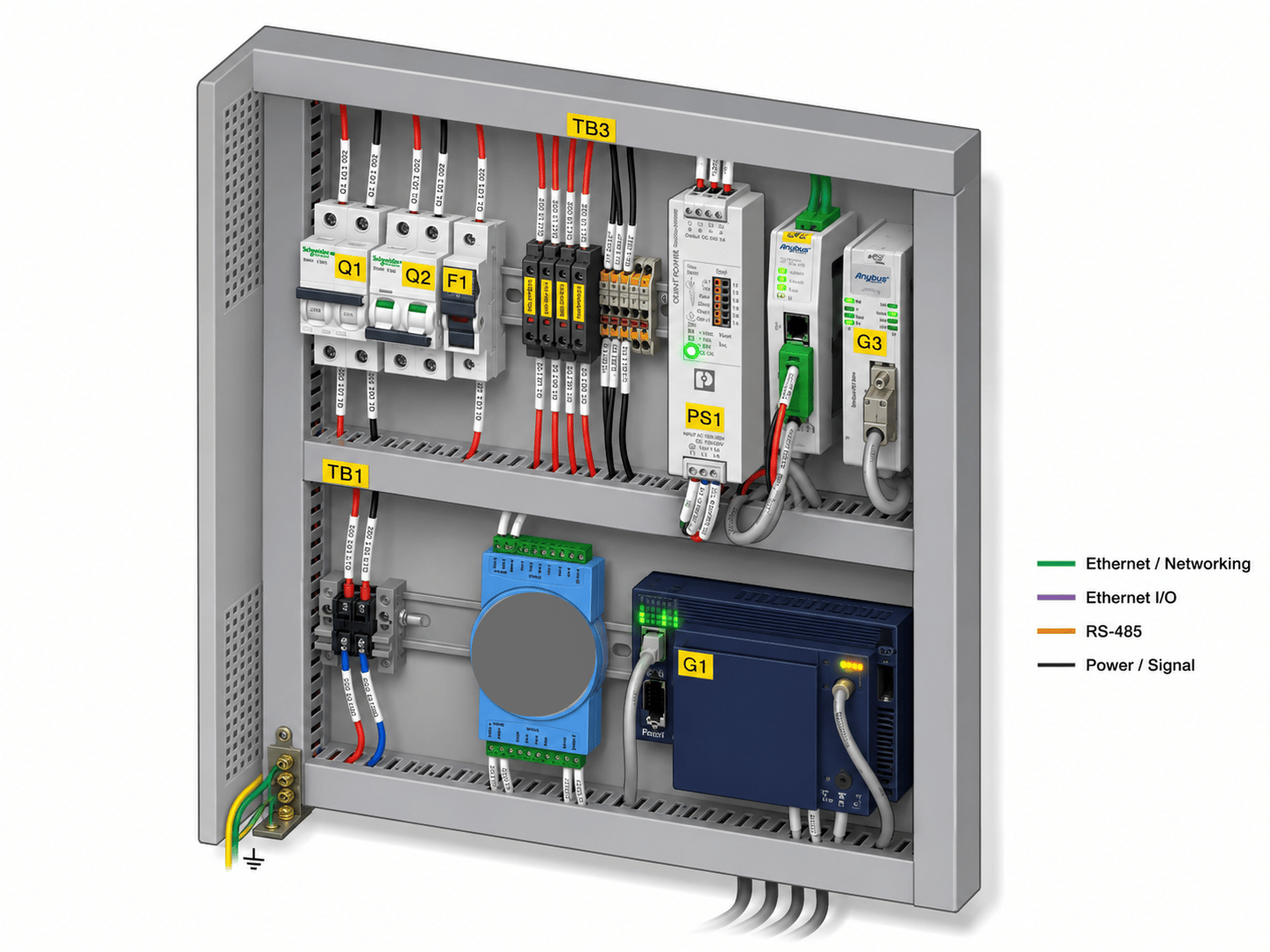
Unlike traditional IT networks, industrial communication networks are designed to meet strict requirements for real-time communication, high reliability, and stable operation in harsh industrial environments with electrical noise, vibration, and extreme temperatures.
Industrial communication networks are the foundation of modern automation systems. They enable machines, controllers, and software platforms to exchange data efficiently, helping manufacturers build flexible, scalable, and intelligent production systems.
2. Why Are Industrial Communication Networks Important?
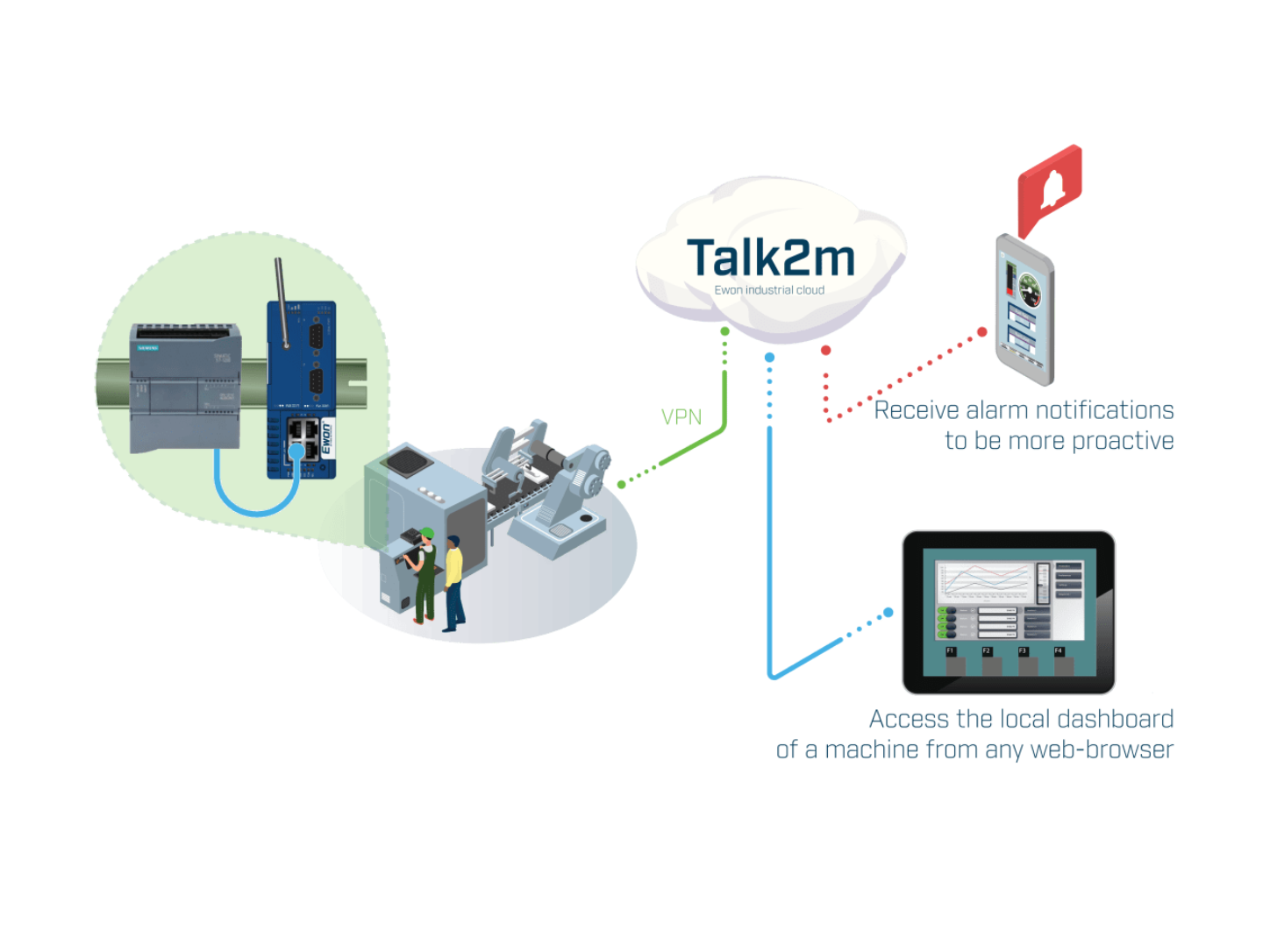
Industrial communication networks serve as the backbone of any automation system. Replacing traditional point-to-point wiring with industrial communication technologies offers many advantages:
-
Simplifies communication between different industrial devices using a single network.
-
Reduces wiring, installation time, and overall project costs.
-
Improves communication reliability and data accuracy with strong noise immunity.
-
Supports international standards, making it easier to integrate equipment from different vendors.
-
Enables faster troubleshooting and equipment diagnostics.
-
Makes future system expansion and upgrades much easier
3. Industrial Communication Network Architecture
Industrial communication networks are typically organized into three layers following the automation pyramid.
3.1. Field Level
The Field Level includes sensors, actuators, transmitters, and remote I/O devices that collect process data and execute control commands.
Common protocols:
-
Modbus RTU
-
PROFIBUS
3.2. Control Level
The Control Level consists of PLCs, industrial controllers, and automation devices responsible for executing control logic and coordinating field equipment.
Common protocols:
-
PROFINET
-
EtherNet/IP
3.3. Supervisory Level
The Supervisory Level includes SCADA, MES, historians, and other management software used to monitor production and analyze operational data.
Common protocols:
-
OPC UA
-
MQTT
Industrial communication networks can also use different transmission media depending on the application:
-
Wired communication: Twisted-pair cables, coaxial cables, or fiber optic cables.
-
Wireless communication: Radio technologies such as Wi-Fi, cellular (4G/5G), or industrial wireless solutions.
4. Common Industrial Communication Protocols
4.1. RS-232 and RS-485
RS-232 is a traditional serial communication standard mainly used for point-to-point connections.
RS-485 is widely used in industrial environments because it supports long-distance communication, excellent noise immunity, and multiple devices on the same network.
Typical applications include:
-
Variable frequency drives (VFDs)
-
Power meters
-
Remote I/O
-
Field instruments
Compatible solution: Ewon Flexy Industrial Gateway
4.2. Modbus
Modbus is one of the most widely used industrial communication protocols due to its simplicity and low implementation cost.
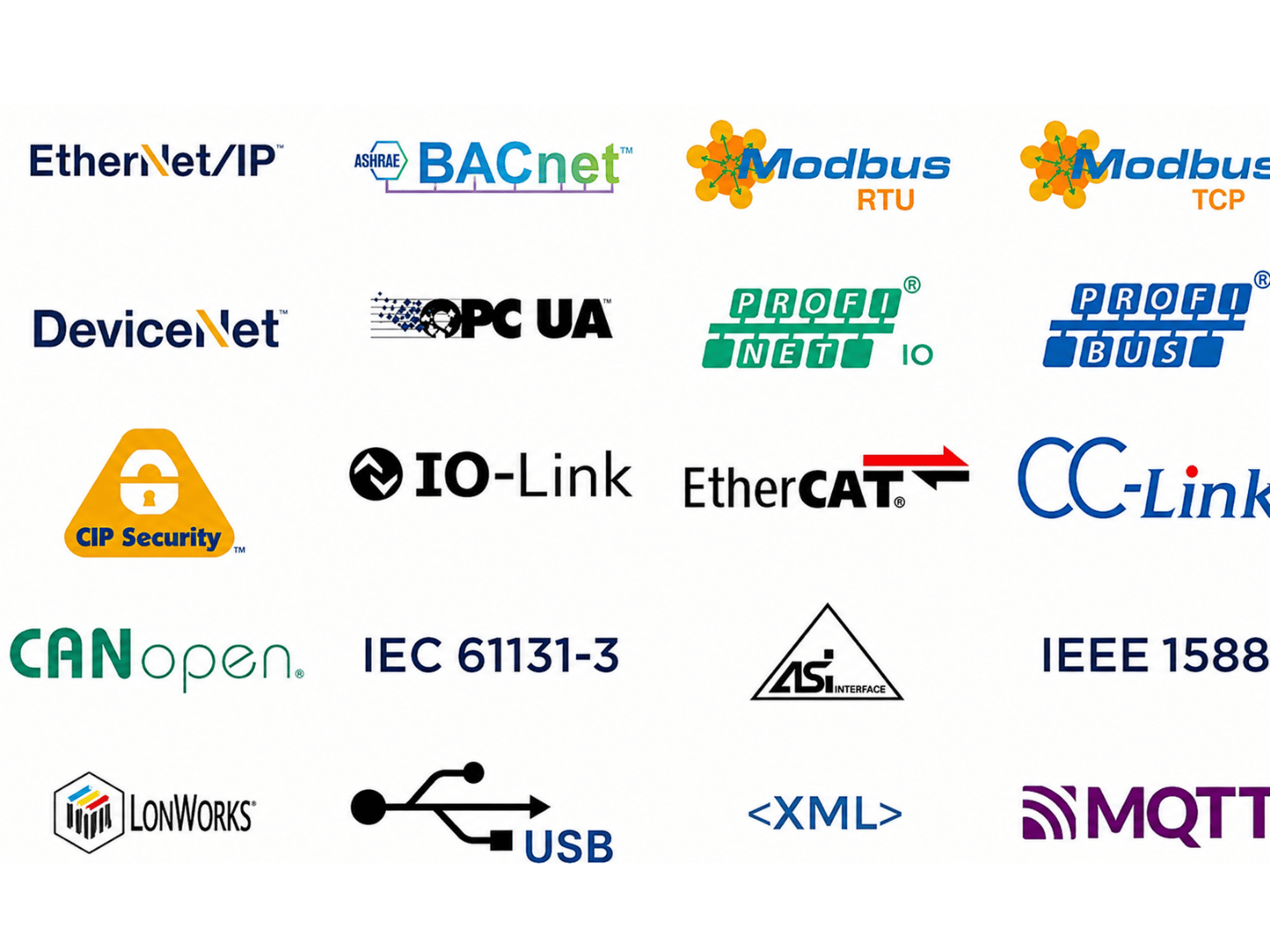
It is commonly used for exchanging basic data between PLCs, HMIs, sensors, and other industrial devices using a Master/Slave architecture.
4.3. PROFIBUS
PROFIBUS is one of the most successful fieldbus standards in factory and process automation.
Although many new systems have moved to Industrial Ethernet, PROFIBUS is still widely deployed in existing Siemens installations, especially for remote I/O systems and valve stations.
4.4. PROFINET
PROFINET is an Industrial Ethernet protocol that supports high-speed, real-time communication.
It is commonly used to connect:
-
PLCs
-
Remote I/O
-
HMIs
-
Industrial robots
-
Motion control systems
PROFINET also provides powerful diagnostic capabilities that simplify maintenance and troubleshooting.
4.5. EtherNet/IP
EtherNet/IP is an Industrial Ethernet protocol developed by ODVA.
It combines standard Ethernet technology with the Common Industrial Protocol (CIP) and is widely adopted in Rockwell Automation systems.
Typical applications include:
-
PLCs and PACs
-
Servo drives
-
Manufacturing systems integrated with enterprise IT
4.6. EtherCAT
EtherCAT is a high-performance Industrial Ethernet technology that processes data "on the fly," enabling extremely fast communication cycles.
It is especially suitable for:
-
Motion control
-
Servo systems
-
Robotics
-
High-speed manufacturing machines
4.7. CAN and CANopen
CANopen is a higher-level communication protocol based on the CAN bus.
It offers flexible network configuration and is commonly used in:
-
Specialized machinery
-
Medical equipment
-
Small industrial robots
-
Mobile machines
4.8. OPC UA
OPC UA is a secure, platform-independent communication standard designed for interoperability between OT and IT systems.
It provides:
-
Built-in security
-
Structured data models
-
Cross-platform compatibility
OPC UA is widely used to integrate SCADA, MES, Edge gateways, and enterprise applications.
4.9. MQTT
MQTT is a lightweight publish/subscribe messaging protocol that communicates through a broker.
Because of its low bandwidth requirements, MQTT is ideal for:
-
Industrial IoT (IIoT)
-
Remote monitoring
-
Energy management
-
Cloud connectivity
-
Edge computing


